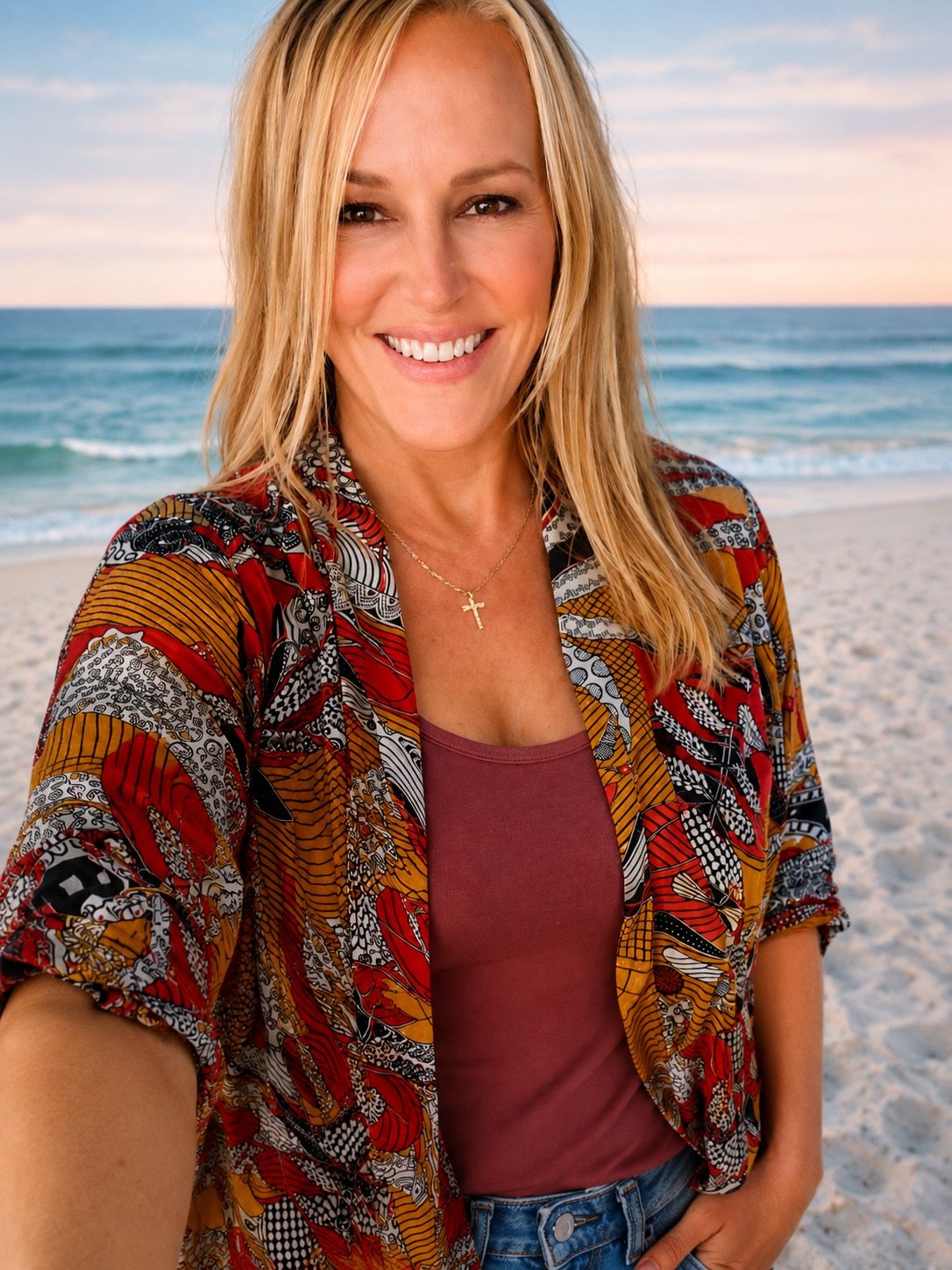
Personal story
Read on ↓
I've spent more than thirty years working with the body.
My professional work began as a certified therapeutic massage therapist, with advanced training and hands-on practice in myofascial release and the ways tension, stress, and lived experience can become patterns in the body.
Long before I had the language of somatic psychology or nervous-system regulation, I was learning through my hands— working directly with the body and observing how profoundly a person's physical experience can reflect what they've been carrying.
What happens when the body keeps responding to something the mind has already learned to live around?
The capable self
At one point in my career, I moved into corporate leadership and became a regional director of marketing for a Fortune 500 company. I built high-performing teams, received company-wide recognition, and became very good at functioning at a high level.
From the outside, I was doing exceptionally well.
Inside, my health was telling a different story.
I was living my life, but I wasn't always fully inside it.
That experience changed the way I understood stress, adaptation, and the nervous system. It taught me that functioning and actually being well are not necessarily the same thing.
The older pattern
Later, I went through a relationship that fundamentally disrupted my sense of autonomy and safety.
It took time to understand what had happened—not simply intellectually, but at the level where the body, nervous system, identity, and behavior intersect.
The pattern was older than the relationship.
I had spent much of my life becoming exceptionally good at adapting.
Achieving.
Anticipating.
Managing.
Over-functioning.
Keeping things moving.
Those adaptations had served me.
Until they didn't.
The shift wasn't becoming someone new.
It was becoming more fully acquainted with who I already was underneath everything I had learned to do.
That distinction changed my work.
I stopped thinking of the nervous system as something that needed to be “fixed” and began understanding it as an adaptive system—one that learns from experience, protects us according to what it has learned, and can develop new patterns over time.
I became interested not only in trauma, but in chronic stress, coercive control, identity, attachment, behavior, physiology, and the everyday adaptations that can quietly become a way of life.
That is where my work lives now.
What became possible
I don't believe people need to spend the rest of their lives excavating their past.
I don't believe every difficult experience needs a diagnosis.
And I don't believe the goal is to become endlessly good at “healing.”
The goal is to know yourself well enough that your history no longer has to make every decision for you.
To recognize what belongs to the past.
To understand what your body learned.
To stop living inside someone else's definition of you.
To step out of the courtroom.
And eventually, to have more of your life available to you.
Functioning isn't living.
I know the difference.
And that's why I do this work.